![[identity profile]](https://www.dreamwidth.org/img/silk/identity/openid.png) em-cavey.livejournal.com posting in
em-cavey.livejournal.com posting in ![[community profile]](https://www.dreamwidth.org/img/silk/identity/community.png) omonatheydid
omonatheydid
Don't forget to check out part 1 of this post! (In fact I recommend it bc some things mentioned here are explained there)
It’s probably not a surprise to anyone familiar with Korean history that Koreans have a complex relationship with their own native culture. A lot of what is considered traditionally Korean was phased out, left behind or even actively eschewed as part of the post-colonial, post-war, sub-38th desperation to modernize and stabilize as quickly as humanly possible. Many of the most obvious markers of classic Korean life were replaced, erased, or even rejected as relics of pre-modern unworldliness, poverty, and devastation. So hanboks and hanoks were put away and torn down, polyester and concrete taking their place as Korea moved forward in a stilted race to escape the hazards of being a poor, damaged, weak country that the rest of the world could afford to ignore. Simply in terms of the looks and sounds of everyday life, the Korea of the 1950s-60s and the Korea of today have astoundingly little in common.
Yet protectiveness for what was considered natively Korean never left public consciousness - in part a remnant of the furious resistance against colonization and invasion, in part a symptom of the hand-in-hand nationalism and patriotism that was stoked as a propulsion engine for the country’s breakneck development. The result is a conflicted refutation of and devotion to Korean culture and identity that has lead Korean people to struggle in answering the deep-seated anxiety about whether who they are is worthy of dignity and pride, responding with both twisted insecurity and warped defensiveness.
But just as everything old is new again, after decades of being considered old-fashioned, unstylish, or just plain tacky, Korean culture and tradition have recently become increasingly visible in mainstream media with a revamped sense of identity. Whereas specifically Korean culture and trendy, Westernized pop culture were once fairly strictly separated, recent years have seen rising permeation of ‘our’ culture into pop culture and questioning of the unspoken rules that keep the two distinct (the popular rise of trot music speaks to that as well). Of course it's pointless to pretend that’s all in earnest. Pop culture always has mercenary purposes and the use of popular entertainment as political soft power is nothing new. And the media's increasingly ubiquitous branding of “K-culture” and assertion of Korean cultural successes as some sort of national prowess can be eyebrow-raising. But as Korea moves further and further out into the world and takes more and more of the world upon itself, it also has more occasion and reason to define what makes Korea Korean. And amidst all the calculated, cynical naming of “K-[whatever]” and other quasi-nationalistic efforts, many Koreans, including younger generations who have only known its current form of Westernized modernity and relative prosperity, have nonetheless been able to find more reminders and reclamations of unique Korean cultural identity through its most accessible media. Yes, this is who we are. Or rather, this is who we’ve always been.
All this being a long-winded, self-indulgent way of saying: here is OP's ranking and review of the ten best examples of Korean culture, history and tradition in modern K-pop.
NOTES: This is not ranking the overall quality of the songs, more like how much + how well the cultural elements were used. For the sake of judging on equal terms, only official releases with formally staged and filmed videos were ranked.
[Plus all the typical disclaimers - these are all subjective personal opinions and impressions, keep it civil, etc etc]
[Also as is the nature of translations, especially literary, there is no one “correct” version, this is just one person’s (OP’s) interpretation]
[OP also had to look up most of the member names here, so corrections are welcome if any are wrong!]
But just as everything old is new again, after decades of being considered old-fashioned, unstylish, or just plain tacky, Korean culture and tradition have recently become increasingly visible in mainstream media with a revamped sense of identity. Whereas specifically Korean culture and trendy, Westernized pop culture were once fairly strictly separated, recent years have seen rising permeation of ‘our’ culture into pop culture and questioning of the unspoken rules that keep the two distinct (the popular rise of trot music speaks to that as well). Of course it's pointless to pretend that’s all in earnest. Pop culture always has mercenary purposes and the use of popular entertainment as political soft power is nothing new. And the media's increasingly ubiquitous branding of “K-culture” and assertion of Korean cultural successes as some sort of national prowess can be eyebrow-raising. But as Korea moves further and further out into the world and takes more and more of the world upon itself, it also has more occasion and reason to define what makes Korea Korean. And amidst all the calculated, cynical naming of “K-[whatever]” and other quasi-nationalistic efforts, many Koreans, including younger generations who have only known its current form of Westernized modernity and relative prosperity, have nonetheless been able to find more reminders and reclamations of unique Korean cultural identity through its most accessible media. Yes, this is who we are. Or rather, this is who we’ve always been.
All this being a long-winded, self-indulgent way of saying: here is OP's ranking and review of the ten best examples of Korean culture, history and tradition in modern K-pop.
NOTES: This is not ranking the overall quality of the songs, more like how much + how well the cultural elements were used. For the sake of judging on equal terms, only official releases with formally staged and filmed videos were ranked.
[Plus all the typical disclaimers - these are all subjective personal opinions and impressions, keep it civil, etc etc]
[Also as is the nature of translations, especially literary, there is no one “correct” version, this is just one person’s (OP’s) interpretation]
[OP also had to look up most of the member names here, so corrections are welcome if any are wrong!]

-:- 10 -:-

A.C.E's Favorite Boys (2020) is inspired, as the Korean name suggests, by the goblins of Korean folklore known as 도깨비 / dokkaebi (yes also the main character of the Gong Yoo drama, no they don’t normally look like that). Dokkaebi are common features of old folktales, often depicted as living in a magical land of their own and known for their spiked clubs that strike gold out of thin air and their talents for manipulating nature and tricking, pranking, and bewitching humans. The lyrics of Favorite Boys adapt the myths and powers of the dokkaebi to present the members as supernaturally enchanting and captivating figures, inviting us to spirit away to a mysterious new dimension. In addition to the general narrative, the chorus borrows directly from ‘geum nawara wara ddukddak’ [금 나와라와라 뚝딱]’ the incantation that dokkaebi use to summon gold. And the line ‘strange and extraordinarily beautiful [이상하고 못내 아름다운]’ in Jun’s first verse refers to the common Korean children’s song, ‘The strange and beautiful land of the dokkaebi’ [이상하고 아름다운 도깨비 나라].
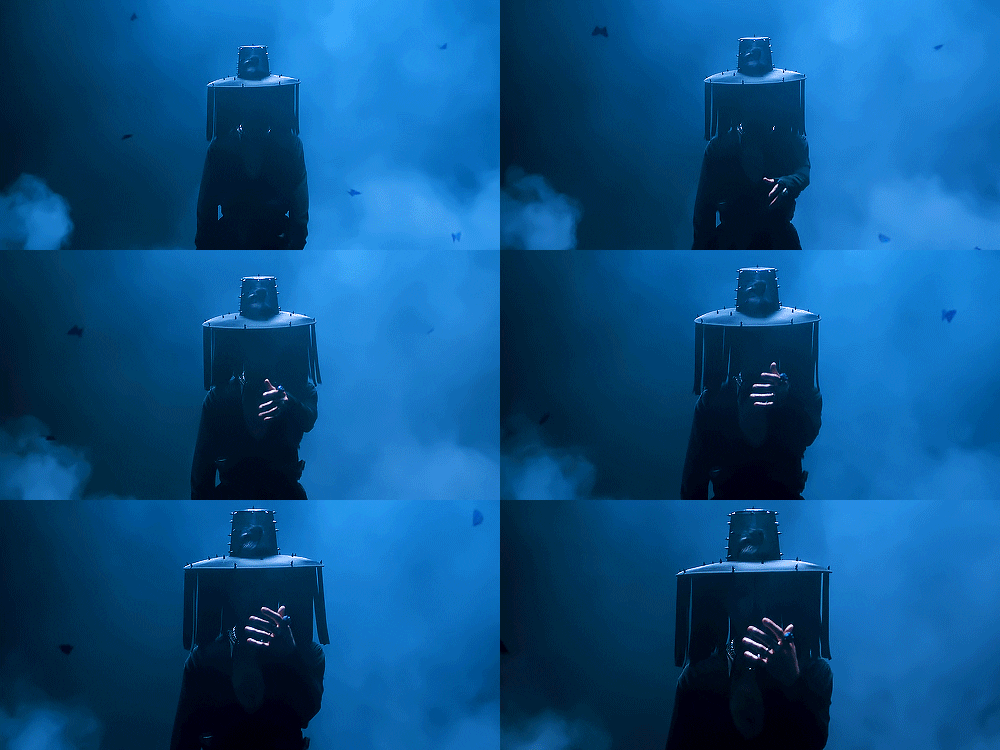
Although the song makes makes good use of its theme, the music in and of itself has only moderate lyrical cultural touches - the traditional influence skews very heavily towards the visuals. But what visuals they are. The absurdly cool MV aesthetics, while not very high-budgeted, hold their own against any major agency production in sheer artistry and sensory voltage. The imagery is unmistakably rooted in tradition but amplified into a fantastical new fiction of its own - backdrops of ultra-saturated Korean art, fluorescent punk-infused hanboks and sageuk-fantasy webtoon looks brought to life. The fashion especially is dripping with ingenious, detailed touches, such as the various creative references to the dokkaebi’s horned heads, pointed ears, and the heavy earrings and beads they’re often depicted wearing.
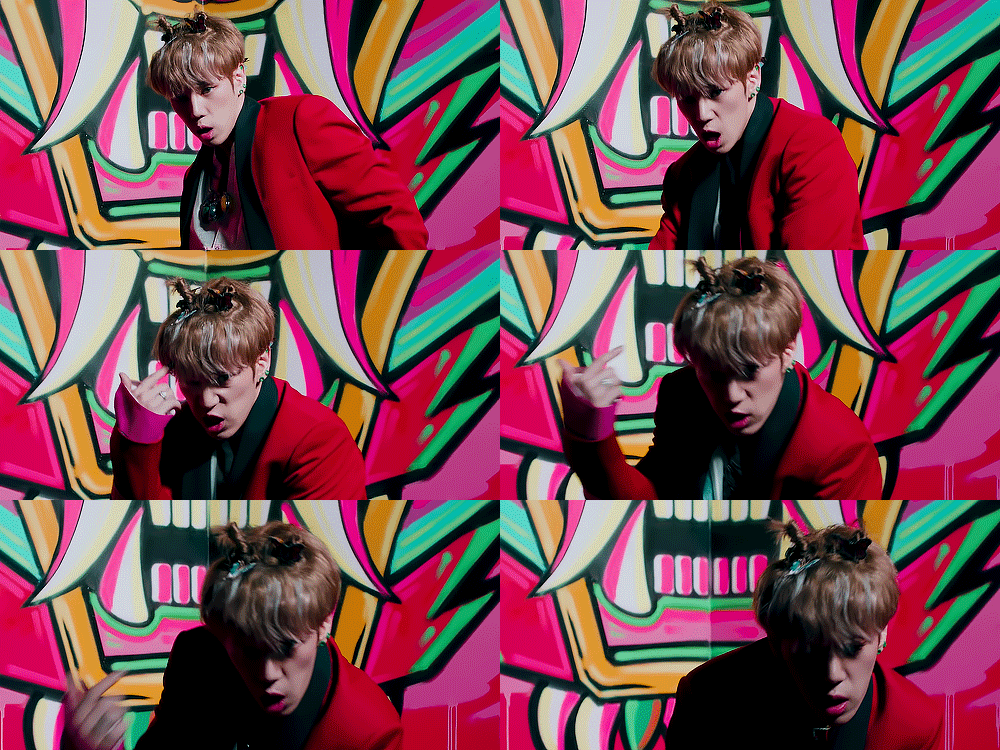
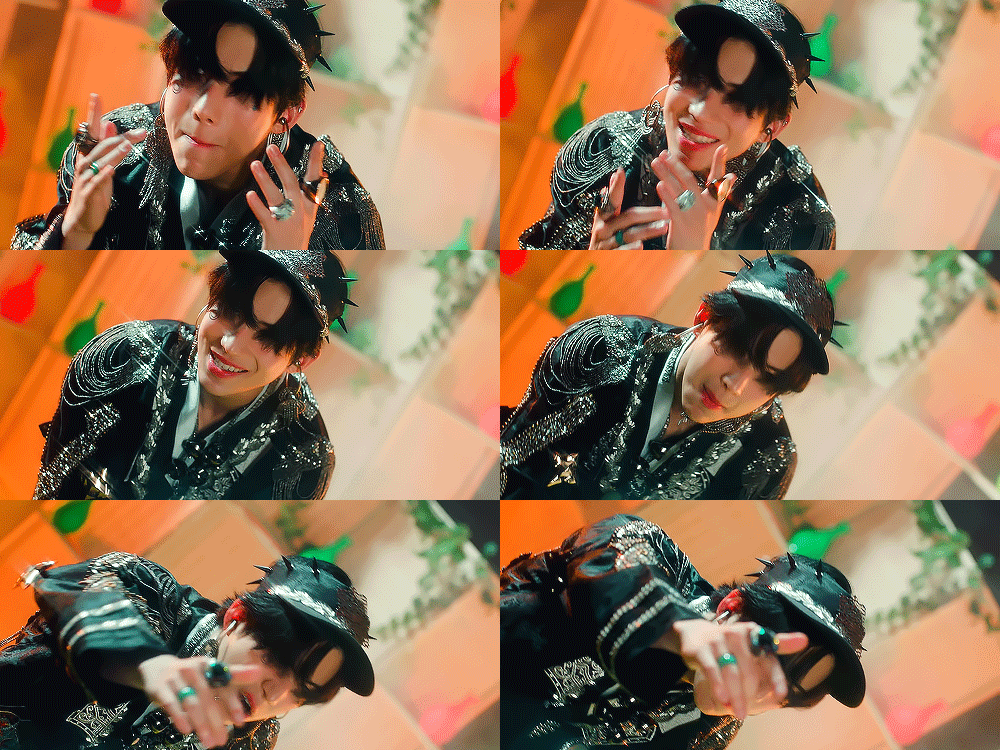
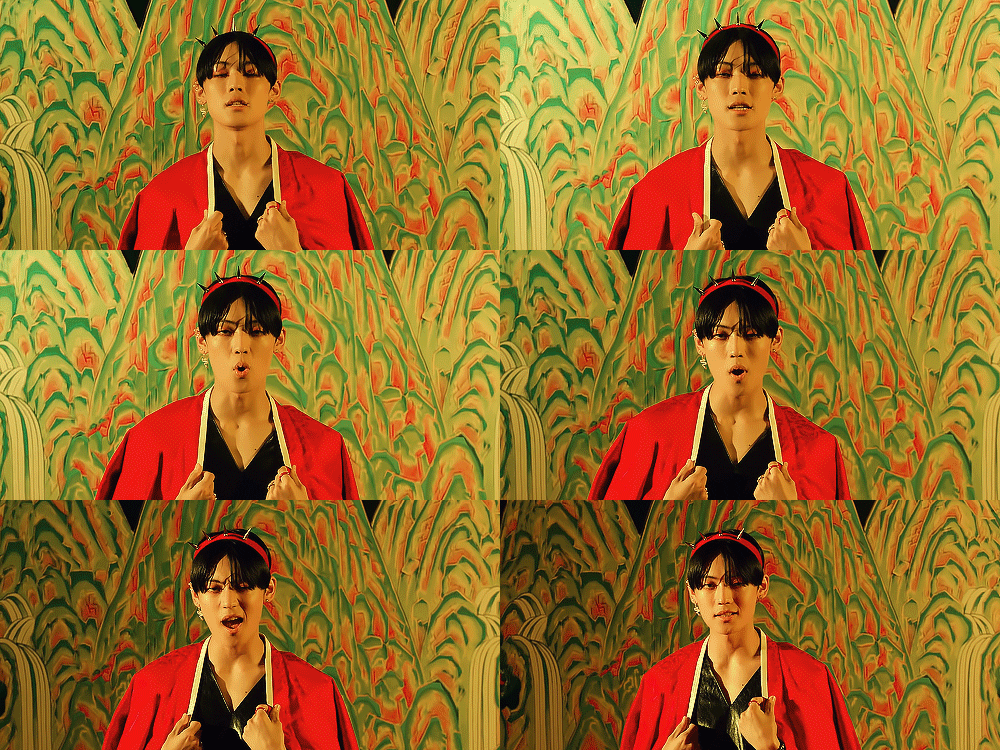
plus one hell of a gothic gat
Music video
!! warning: flashing/strobing !!
Director's cut
-:- 9 -:-

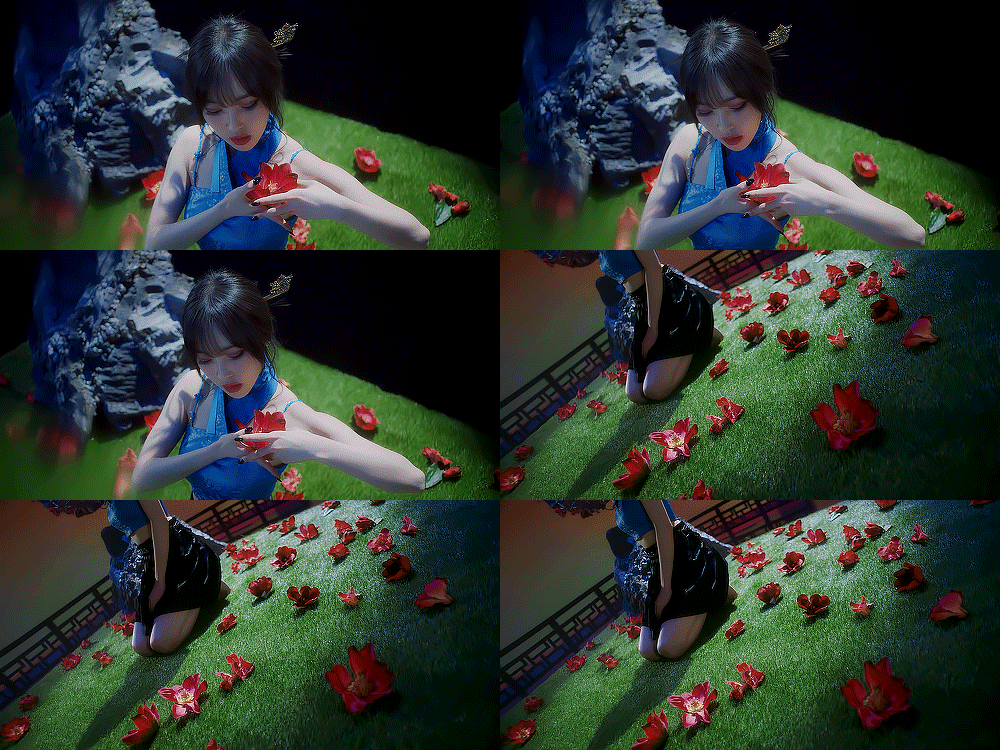
Though traditional concepts are unfortunately rare for female idols, Yuju came through with Play (2022), a sultry solo title that balances classically Korean imagery and tropes with Westernized looks and sounds. The material features several traditional symbols and signifiers of femininity, including highlighted use of the gayageum in the music, a string instrument often played by and associated with women. The video features camellias, flowers which have a lot of significance in Korean culture and are frequently used to represent female beauty or constant love. And in some shots Yuju sits on a long swing, a traditional game/pastime of Korean women and an old literary symbol of feminine grace and vitality, most famously depicted in the Chunhyang-jeon when nobleman Lee Mongryong falls in love with the gisaeng's daughter Chunhyang at first sight upon seeing her playing on a long swing. Alongside her fusion hanbok outfit, Yuju also wears a jewelled binyeo in her hair, a typical Joseon-era hair ornament that’s often considered to be symbolic of women, as well as being a common lover’s gift.

While not overtly traditional, the eloquent and florid lyrics are full of vibrant imagery and fluid, elegant Korean vocabulary and syntax - it’s even a little disappointing how the choppy repetition of no-no-no-nori in the chorus interrupts the natural flow and cadence of the rest of the words. The sophistication of the words and expressions make the lyrics read a bit like an old letter from a noblewoman to a cruel former lover, poised and genteel and yet edged with spite and pain. For example, the tagline to the chorus - "떠나시네" (You depart) - is in anachronistically refined formal speech, yet delivered with a hint of wry, bitter acidity. Though all in all it dabbles relatively superficially in traditional culture, the storytelling of Play is a worthy addition to the kinds of narratives that can be told in K-pop, all the better for barely being distracted by unnecessary, grammatically questionable English.
Music video
-:- 8 -:-

Arirang, the collective name for a vein of closely related folk songs, is one of Korea’s most recognizable and universal traditions. Primarily dealing with themes of love, separation, and sorrow, the songs have numerous variations and many of them are specific to certain regions. The most common refrains are treated like an unofficial national anthem and the Jindo arirang (literally the arirang from Jindo / Jin island) is one of the most famous. A.C.E’s Jindo Arirang (2021) adapts some of the most typical lyrics and melodies of arirang to create what is without a doubt one of the most pound-for-pound overtly traditional songs in mainstream K-pop. In fact, it borrows so heavily from folk traditions and music that it’s questionable whether you can call it its own song rather than a pretty drastic arirang remix. As far as musical stylistics go, it’s definitely unique in K-pop and dives unprecedently deep into Korean folk music's unique soulfulness and sorrow (though ironically the actual Jindo arirang is one of the more musically upbeat versions).
Jindo Arirang is also unique in that it was first released through a special performance video for Sam-il jeol, a major national holiday that commemorates the March 1st Movement of 1919, one of the most important events of the Korean Independence Movement against the Japanese empire. So rather than being a conventionally produced single or b-side, the song assigns itself the complex task of encapsulating both the pain and the strength of the March 1st Movement. Grief and joy co-exist in many arirangs but that may be more than this modernized version can really pull off since the mix of genres/tones here doesn’t always feel coherent. The mournfulness of the adapted arirang abruptly segueing into more typical autotuned and synthed boy group sounds and then cycling back around to a more festive madang nori-style song - all in three minutes - misses the mark for me and ends up too busy and muddled. It feels all the more like a missed opportunity since actual arirang lyrics usually narrate their own tonal shifts and paradoxes but the latter half of Jindo Arirang doesn't make use of that lyrical complexity. Nonetheless, the visuals help make up for these shortcomings, despite being a relatively stark performance video. The choreography uses several elements of traditional Korean movement and dances, including salpuri, expressively modulated through the shifting musical tones. The dignified hanbok outfits are presented first in muted, solemn white (the traditional color of mourning/grief in Korea) before dashing in vivid, gravid navy blue, red, and black - most likely intended to be visually reminiscent of the taegukgi. Though the musical execution is a bit lacking, the simple yet meaningful aesthetics of the performance complement the music to effectively illustrate the themes of patriotism and historical memorialization.
Jindo Arirang is also unique in that it was first released through a special performance video for Sam-il jeol, a major national holiday that commemorates the March 1st Movement of 1919, one of the most important events of the Korean Independence Movement against the Japanese empire. So rather than being a conventionally produced single or b-side, the song assigns itself the complex task of encapsulating both the pain and the strength of the March 1st Movement. Grief and joy co-exist in many arirangs but that may be more than this modernized version can really pull off since the mix of genres/tones here doesn’t always feel coherent. The mournfulness of the adapted arirang abruptly segueing into more typical autotuned and synthed boy group sounds and then cycling back around to a more festive madang nori-style song - all in three minutes - misses the mark for me and ends up too busy and muddled. It feels all the more like a missed opportunity since actual arirang lyrics usually narrate their own tonal shifts and paradoxes but the latter half of Jindo Arirang doesn't make use of that lyrical complexity. Nonetheless, the visuals help make up for these shortcomings, despite being a relatively stark performance video. The choreography uses several elements of traditional Korean movement and dances, including salpuri, expressively modulated through the shifting musical tones. The dignified hanbok outfits are presented first in muted, solemn white (the traditional color of mourning/grief in Korea) before dashing in vivid, gravid navy blue, red, and black - most likely intended to be visually reminiscent of the taegukgi. Though the musical execution is a bit lacking, the simple yet meaningful aesthetics of the performance complement the music to effectively illustrate the themes of patriotism and historical memorialization.
Performance video
A version of the actual Jindo arirang
-:- 7 -:-

Over the last couple years, Oneus has carved out a niche of sorts for themselves with several dedicated, detailed traditional concepts. Luna, the title song off their latest album Blood Moon (2021), is probably their most elaborately traditional title song yet. The aesthetics of the video are among the most gorgeous and richly imagined of traditional concepts so far, combining beautiful hanbok outfits and sageuk-esque sets with lavish digital effects for a feeling of heightened artifice and artfulness. The visual story weaves through one vivid, surreal dreamscape after another, spanning the past and present in a narrative of undying, agonizing loneliness and longing.
But as stunning as the visual aesthetics are, musically the song is a much more mixed bag. Like the visuals, the sounds are amongst the most heavily traditional of recent K-pop. But more traditional isn’t always better if it isn’t executed in a way that feels satisfying. On paper, the lyrics have a sense of classic quaintness to them, fully Korean and unusually complex and antiquated in terms of vocabulary and grammar for K-pop, almost like lines from a sageuk script. The music likewise is inspired by a wide array of traditional instruments, intercut with modern beats and sounds. Each of these elements are well-developed on their own. But together, the delicate sounds and languid cadence of the words don’t mesh well with the urgency of the tempo and crowded instrumentals. The dense lines end up sounding unnecessarily rushed, jarred or just badly matched with the melody (the syncopation in the last lines of the chorus verses is especially rough). The rap verses also stick out like they were clipped in from a more typical K-pop song. It’s all a bit like, say, syrup over pop rocks, the combination kind of ruins the intended effect of both. A bit like Jindo Arirang, the song feels like it’s trying to split the difference between borrowing the tone of certain traditions and not letting go of some modern K-pop conventions and it all ends up somehwat less than the sum of its parts. Still, even amidst the surge of recent hanbok and gugak (traditional Korean music)-infused songs, Luna stands out as one of the most detailed, extensive explorations of traditionalized looks and sounds.
But as stunning as the visual aesthetics are, musically the song is a much more mixed bag. Like the visuals, the sounds are amongst the most heavily traditional of recent K-pop. But more traditional isn’t always better if it isn’t executed in a way that feels satisfying. On paper, the lyrics have a sense of classic quaintness to them, fully Korean and unusually complex and antiquated in terms of vocabulary and grammar for K-pop, almost like lines from a sageuk script. The music likewise is inspired by a wide array of traditional instruments, intercut with modern beats and sounds. Each of these elements are well-developed on their own. But together, the delicate sounds and languid cadence of the words don’t mesh well with the urgency of the tempo and crowded instrumentals. The dense lines end up sounding unnecessarily rushed, jarred or just badly matched with the melody (the syncopation in the last lines of the chorus verses is especially rough). The rap verses also stick out like they were clipped in from a more typical K-pop song. It’s all a bit like, say, syrup over pop rocks, the combination kind of ruins the intended effect of both. A bit like Jindo Arirang, the song feels like it’s trying to split the difference between borrowing the tone of certain traditions and not letting go of some modern K-pop conventions and it all ends up somehwat less than the sum of its parts. Still, even amidst the surge of recent hanbok and gugak (traditional Korean music)-infused songs, Luna stands out as one of the most detailed, extensive explorations of traditionalized looks and sounds.
Music video
"Theatre" performance version w/ even more traditional elements
"Theatre" performance version w/ even more traditional elements
-:- 6 -:-

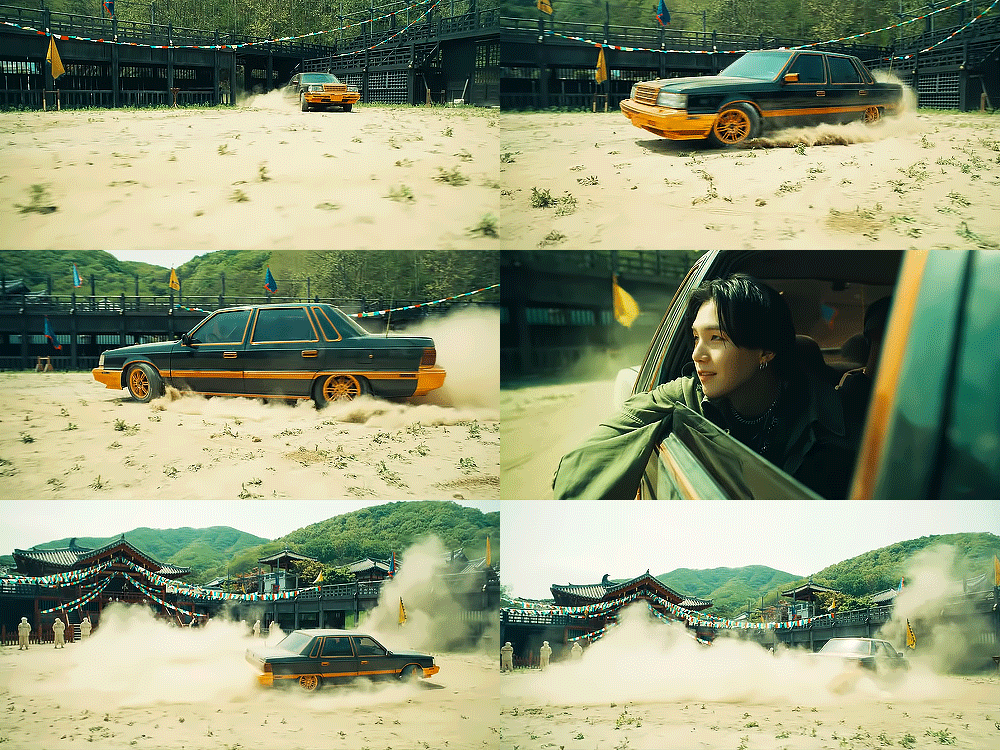
It’s not that unusual to see Korean culture in K-(pop-)hiphop but Agust D - BTS Suga’s alter-ego - takes it to an intricately realized level with Daechwita, the title track of his second mixtape D-2 (2020). Making several loaded cultural and historical references, the video and lyrics evidently draw primary inspiration from the history and media depictions of Gwanghaegun, the 15th king of Joseon from 1592-1608. As one of the most controversial kings in Joseon history, Gwanghae was deposed in a coup, died in exile, and remains one of only two kings not to be restored to full royal honors and titles after death. To this day, the legacy of Gwanghae is widely disputed as to whether he was a pragmatic, clever politician or a callous, power-hungry despot. What’s more, a long-standing historical rumor/conspiracy theory suggests that at one point the volatile king was secretly replaced by an identical commoner who proved to be a wiser, better ruler than the king himself (popularized in modern day by the 2012 film Masquerade and the 2019 drama The Crowned Clown). The video calls on this fiction and puts Big Hit HYBE’s budget to good use in a sweeping, blackly comic story about a bloodthirsty, decapitation-happy tyrant facing off against a modern doppelganger/usurper (who apparently procured a customized 1990s Hyundai Grandeur on his way back to Joseon).
The opening instrumentals, title, and chorus of the song directly borrow from the daechwita, a regnal march used to herald royal or military processions, and most commonly used to announce the arrival of the king. And throughout, the music uses both court instruments and madang nori (common folk music) instruments, presumably to represent the idea of dual identity and status at the heart of the song. Lyrically, Daechwita takes on these themes of unstable power and conflicted identity by making an arrogant, vulgar proclamation of Agust D’s superiority, drawing a parallel between the fame, fortune, and influence he’s amassed as a member of BTS to modern-day monarchical power (and dropping in a few not-so-subtle disses along the way). And yet his bravado is nonetheless tinged with jadedness, uncertainty, and even fear about the value of his strength and status. One line in particular mentions locking his past in a rice chest in a reference to the brutal execution of Crown Prince Sado (another widely debated figure in history), the unstable young heir who was forced to an inhumane death because he was not fit to be king. Much like the historical characters it pays homage to, the nature and meaning of Daechwita will depend on interpretation of those observing it. But in any case the song meaningfully borrows from Korea’s sonic traditions and some of the darkest moments in its royal history to make an ominously dark statement on being one of the most famous people in Korea’s modern day.
Music video
-:- 5 -:-

As mentioned in part 1 of this series, Stray Kids have dipped into traditional aesthetics more than once, but with Thunderous (2021) they evolved from hanbok costumes to more complete cultural storytelling. 소리꾼 / sorikkun, the Korean title of the song, is a name for a traditional Korean singer/storyteller. The term is derived from 소리 / sori - literally meaning sound but also a name for Korean oral/vocal traditions, especially pansori (longform storytelling that’s part spoken word and part vocalization) + 꾼 / kkun - an old name for a common or lowborn person with a professional or especially masterful talent for something. This concept underpins the whole theme and narrative of the song (and is repeated ad nauseum in the chorus...). Changbin’s rap verses in the beginning especially pay homage to the vocal style and cadence of some pansori narration and the lyrics get a lot of fun, punny creative mileage from playing around with related words. Sample line: All you woodcutters [나무꾼 namu-kkun] can go home now, there’s nothing for you to criticize/cut down here [나무랄 데가 없네 namural ttega upne].
The instrumental influence is overt as well, with the lyrical references to rolling winds, clouds, and thunder - all common tropes of nature in Korean legend and folklore - sonically represented by crashing kwenggari, gongs, drums, and horns. Storywise, the song is essentially a traditionalized take on a familiar boy group mission statement, putting a cultural spin on touting their own charisma, talent, and will. It’s a layer of fresh veneer on well-worn material, loosely adapting it to the archetypal Korean hero's journey story of a band of misfit protagonists gathering to the royal capital of Hanyang or other major Joseon city to make their mark and change their fortunes.
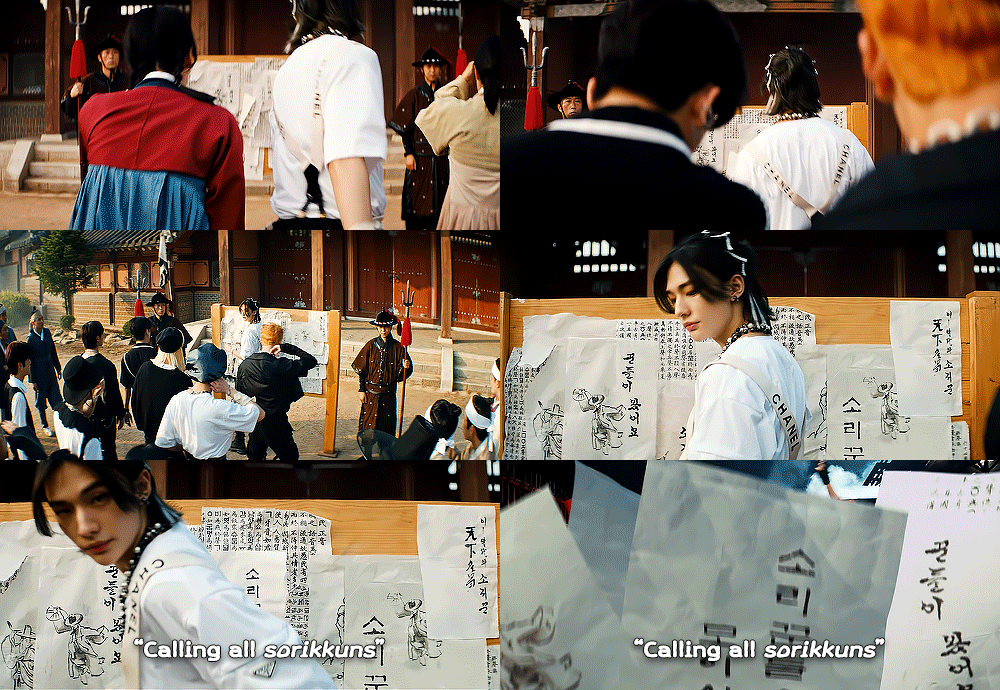
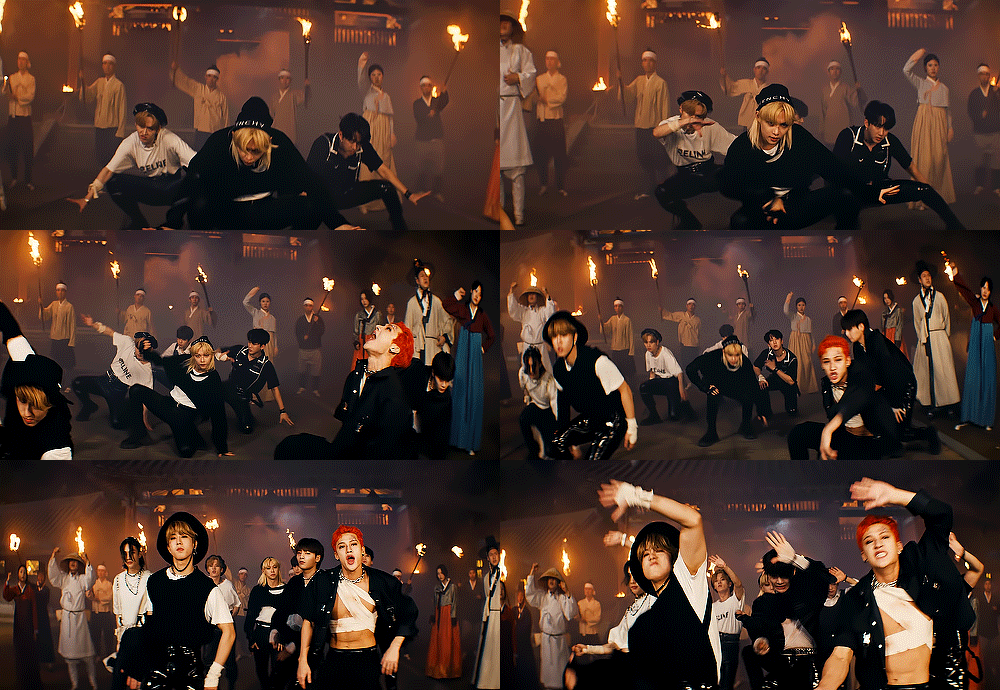
The video also gets points for not being afraid to have a lot of smirking fun with familiar imagery and tropes. There’s a great sense of knowing jokiness to the ironic, anachronistic details, such as Porsches, ATVs, scaffolding, and speakers on full-scale sageuk sets, or wearing emblazoned Celine and Chanel in a room papered with hanji. Plus props to Bangchan for working in the quintessential sageuk stomach/chest bandage as a thematically appropriate crop top.

the unenthusiastic extras are by far my favorite touch
Where it all falls a bit short however, is not telling a very specific story or developing the aesthetic beyond a level that wasn't exactly new by the time Thunderous was released in late 2021. The cultural aspects throughout the song are surprisingly extensive and quite well-executed and yet the song still doesn’t escape some K-pop cliches like its uninspired chorus (and the awful sori/sorry rhyme squanders a LOT of the song's lyrical goodwill). It does the many things it does solidly but what it does ultimately isn’t exceptional enough to be truly outstanding in any aspect. Jack of all trades, kkun of none.
Music video
Extended performance version @ 2021 KBS Gayo
Filmed at Namhansan-seong, an ancillary palace and fortress that was a pivotal stronghold during the 1693 Qing invasion of Joseon
-:- 4 -:-

Oneus’s LIT (2019), one of their earlier ventures into traditional themes, is a refreshing variation from the sub-genre of traditionally-inspired bombastic boy group swag anthems (see… most other entries on this list). While ultimately not all that narratively different from the others, LIT goes for joyous, breezy, light-hearted confidence without relying on scowling, shouting, bass-heavy noise music bravado. Instead, the playful lilt of the instumentals, melody, and vocals come off as whimsical, gleeful, and just a little bit tipsy. The theme and story of the song is a rallying cry to live life to the fullest and enjoy and believe in yourself, infusing the material with homages to the characters of classic Korean folktales such as archetypal folk hero Hong Gildong and trickster wizard Jeon Woochi, who was widely popularized in the 2009 fusion-sageuk comedy Jeon Woochi, starring Kang Dongwon.
Appropriately, the lyrics are absolutely bursting with cultural references. About every other line is an homage or direct usage of an endemically Korean phrase, saying or idiom, including but not limited to:
오늘 달이 좋구나! - how good the moon is tonight!
[2절] 오너라! - let [the second verse] approach!
얼쑤, 늴리리야, 옹헤야, 지화자… - ulsoo, nilliriya, ongheya, jihwaja etc (traditional exclamations of joy and excitement)
큰북을 울려 - sound the great drums
님과 함께 - with my love (phrases using the word 'nim' for a lover is a common aspect of arirang)
동에 번쩍 서에 번쩍 - Flash in the east, flash in the west (an idiom associated with Hong Gildong)
Though more creatively conceived and realized than Thunderous, LIT doesn’t completely avoid the same broad pitfall that a lot of recent traditional concepts/performances fall into. Although well-executed, the catch-all amalgamation of popular cultural tropes ends up feeling somewhat like a genericized pastiche of Korean traditions without much direction or purpose, veering into aesthetics for aesthetics’ sake and maybe even a tiny bit pandering. Nonetheless, LIT strikes an especially great balance between new and classic. The cultural aspects don’t overpower the song or weigh it down but it doesn’t exist outside of them either. It’s one of the few so-called traditional K-pop songs that could be performed in complete Western dress and sets and still be undeniably culturally Korean in its form and content.
Music video
For reference, Kang Dongwon as the title character in Jeon Woochi
The most famous part starts around 2:25. Sadly no subs but the stylistic influence should be pretty obvious.
Road to Kingdom performance version
w/ more Jeon Woochi, Kingdom-style zombies, and a samul nori troupe
Officially filmed "Taekwondo" version of the Kingdom performance
-:- 3 -:-

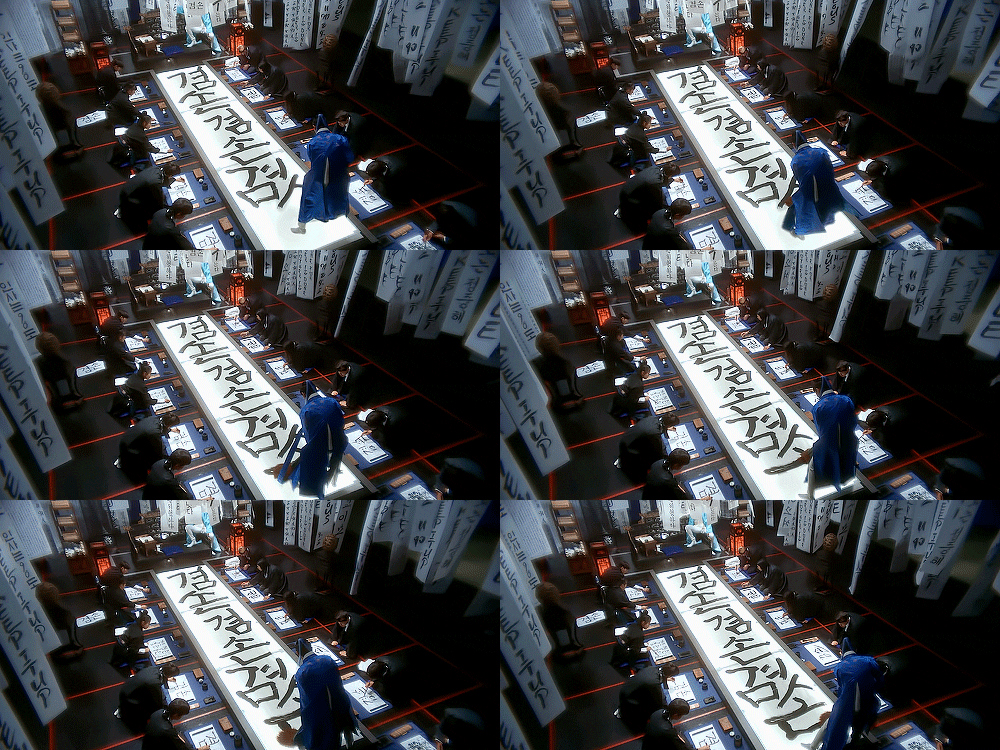
멋 [meot] is a deceptively deep idea. The easiest translation would be ‘cool,’ but like a lot of things Korean, one English word doesn’t really do it justice. It encompasses the idea of being superficially cool, awe-inspiring and plain badass, but also whatever you find impressive and admirable - both physical and spiritual, in and out. 멋 can be both deeply artificial or truer than anything and it’s something most of us want to have, maybe a little too much. Ateez's The Real (2021) illustrates these themes in a fantastically overstuffed MV, filling up an entire kitchen sink of male high school manhwa and muhyupji (martial arts pulp fiction) symbols of 멋 - bad boys with loose ties and motorbikes, baseball teams that trawl the halls looking for trouble, thread-bound books of ancient martial arts secrets, preternaturally charged-up street fights with the occasional well-timed lightning bolt (it happens) and some John Woo doves while you’re at it, hell why not. All of this is filtered through a frenzied blend of souped-up modern, retro, traditional, and vaguely post-apocalyptic aesthetics that still somehow manage to work together.
calligraphy club at Ateez High
Just like the visuals, the music is absolutely brimming with teen spirit. The reedy, triumphant howls of Korean strings and winds cleverly meshes with trap beats and infuses traditional flavor to the nervy energy of the song - the fast-strumming strings over San’s pre-chorus are an especially great touch. The lyrics also feature a sprinkling of Korean idioms and a couple taglines of snarling satoori, another hallmark of male machismo. But where the song really lands its thematic punch is with the gently subversive message of the lyrics: that real 멋 comes not from superficial posturing but from following rules of humility and kindness (sorry, humble and kindness), as well as constant courtesy and deference towards others. This is highlighted in the video by how Mingi’s rock-solid protection against a long-haired assailant's fist turns out to be an old-school ethics textbook tucked into his pants and the final showdown lightning strike ends up bestowing the dance-battling gangs with a classic tome on “멋: Revised Edition.”
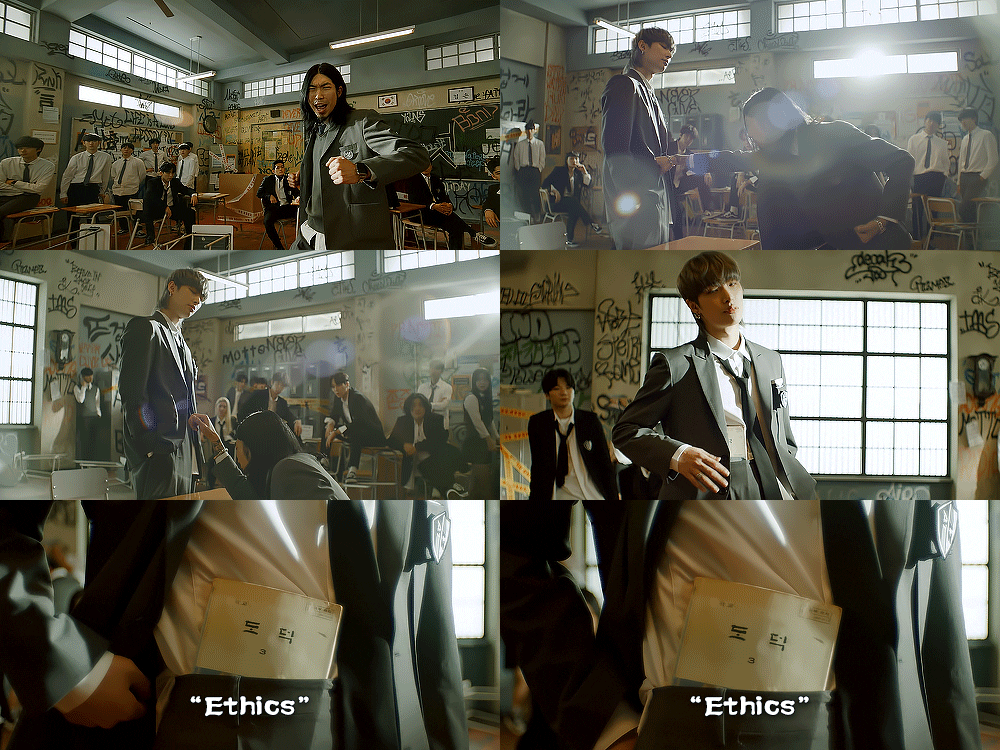

also... whatever is going on here

The Real deserves extra credit for how it utilizes some traditional aspects without being too stuck to stylish quasi-historical artifice. Korean culture still has specific elements in modern day but relatively few songs and performances manage to tap into a particularly Korean identity without going full-on fusion sageuk (not that that's a bad thing but it's not the only option out there). But The Real accomplishes this by pairing lyrics and video to read as both a love letter and a firm rebuke to the cutthroat, competitive side of Korean teenage social dynamics and tensions, particularly the tightrope of social pressure sometimes walked by testosterone-charged teenage boys. Thus the message of the song taps into a particularly Korean brand of tumultuous teen ethos, speaking knowingly to that ephemeral moment of youth when you still have the potential to be anything and yet few things matter as much as being 'cool' - whatever that means.
Music video
-:- 2 -:-

Although intended as an intro and prologue to the title song Luna, Oneus’s intro track Window (2021) is a much more successful blend of traditional and modern sounds, on top of innovative material and narrative. The blistering pansori-style narration and vocals from sorikkun and gukak musician Choi Yerim compellingly set up the storyline and tone of the song.
죽어도 죽지 못하는 여섯 요괴라
하루 가고 일 년 가고
백 년 가고 천 년 가도
애달파라 이내 마음
오늘도 찾아 헤매
적월이 뜨는 밤
나타난다 허더라
O six demons who are dead but cannot die
A day passes, a year passes,
A hundred years pass, even a thousand
Yet how sorrowful their hearts remain
Still another day and still they search
On the night that the scarlet moon rises
They’ll appear, or so it’s told
Though the later vocal lines are shared with Luna, they sound much better here with a different rhythm and stronger delivery. And Window succeeds where Luna faltered in that the song maintains an emotional consistency and tonal coherence through the blended genres, with both the searing gukak-style vocals and the steely rap verses meshing naturally with driving beats and seething han (bitter, resentful sorrow).
The wording of the rest of the lyrics is also archaic and arcane, befitting the story of the song. Most notably, the first lines in the chorus - changeul negojya changeul negojya, inae gasume changeul negojya [창을 내고쟈 창을 내고쟈 이내 가슴에 창을 내고쟈] - are Joseon-era old Korean that roughly translates to ‘I want to make a window, I want to make a window, let me make a window in my heart,’ meant as an antiquated expression for releasing the pain of pent-up anguish and frustration. It’s a fascinating choice, sacrificing easy accessibility for the sake of authentic, specific storytelling. (It may be the only K-pop lyric I’ve actually had to research to make sense of [...texting my Korean history professor cousin counts as research…]). As mentioned above, where a lot of traditional/cultural concepts leave something to be desired is their tendency to substitute style for substance. Traditional aesthetic isn’t necessarily material in and of itself but it’s rare for culturally influenced songs to have their own interesting concept and theme outside of broadly ‘traditional.’ Joseon vampires praying in old Korean for the sweet release of death and begging for meaning to their immortal restlessness? Now, that’s interesting.
As it wasn’t fully promoted, Window only features a scaled-down performance video, but one that nonetheless effectively adds to the aesthetics of the song. The moody, sinister visual design complements Oneus and Choi Yerim’s committed performances, and the striking finale to the choreography brings the vampire theme home. My only real complaint is since the song is an intro, it’s short and there’s not quite enough material there. It would’ve been amazing to see the group sink their teeth (ugh) into this as a properly fleshed-out song and comeback concept. And if this had been a full song it probably would have been first pick but as it is, it comes just short of overtaking the top spot…
The wording of the rest of the lyrics is also archaic and arcane, befitting the story of the song. Most notably, the first lines in the chorus - changeul negojya changeul negojya, inae gasume changeul negojya [창을 내고쟈 창을 내고쟈 이내 가슴에 창을 내고쟈] - are Joseon-era old Korean that roughly translates to ‘I want to make a window, I want to make a window, let me make a window in my heart,’ meant as an antiquated expression for releasing the pain of pent-up anguish and frustration. It’s a fascinating choice, sacrificing easy accessibility for the sake of authentic, specific storytelling. (It may be the only K-pop lyric I’ve actually had to research to make sense of [...texting my Korean history professor cousin counts as research…]). As mentioned above, where a lot of traditional/cultural concepts leave something to be desired is their tendency to substitute style for substance. Traditional aesthetic isn’t necessarily material in and of itself but it’s rare for culturally influenced songs to have their own interesting concept and theme outside of broadly ‘traditional.’ Joseon vampires praying in old Korean for the sweet release of death and begging for meaning to their immortal restlessness? Now, that’s interesting.
As it wasn’t fully promoted, Window only features a scaled-down performance video, but one that nonetheless effectively adds to the aesthetics of the song. The moody, sinister visual design complements Oneus and Choi Yerim’s committed performances, and the striking finale to the choreography brings the vampire theme home. My only real complaint is since the song is an intro, it’s short and there’s not quite enough material there. It would’ve been amazing to see the group sink their teeth (ugh) into this as a properly fleshed-out song and comeback concept. And if this had been a full song it probably would have been first pick but as it is, it comes just short of overtaking the top spot…
Performance video
!! warning: flashing !!
-:- 1 -:-

The first and still the best. 2017's Shangri-La by Vixx, K-pop's original concept kings, is generally acknowledged as the first mainstream K-pop song to really embody Korean tradition and its music, lyrics, aesthetics, choreography, and performances all coalesce to tell a complete, fully realized story in a way that, in OP’s
And one of Shangri-La's best distinctions from other K-pop songs (and even most other entries on this list) are the finely drawn, fully Korean lyrics, which are literary, evocative and expressive in a way that’s very rare in mainstream K-pop. While not necessarily old-fashioned, they are a masterful use of endemically Korean language in their imagery, word choice and expressions. It’s one of the few K-pop lyrics that reads fluidly and with a clear sense of narrative progression all on their own, much like an actual Korean poem set to music. And the instrumentals and lyrics harmonize with and further elevate one another, fitting together like two halves of a whole piece.
Flowers are in radiant bloom
And even the wind tastes sweet here
In this dream
Wherever I am with you
My feelings flow and billow
In this scene
I get drunk on you
I lean into your fading fragrance
What does time matter when I’m looking at you
I see you bathed in the white light of the rising moon
You are the whole of day and night
You leave no space unfilled
You are each and every breath in this world
Color over me
A little more fully
Spread deep through the night
I don’t want to escape
So my eyes close
And search for you in me again
I’m intoxicated
A little more drunk
Drown me in this dream
You come close
And seep into me alone
The night asks if you are well
To the envy of the red camellias that you resemble
Your sugared lips gleam like shining light
And rouse waves in my sleeping heart
The unripe peaches here are still sweet
Under floating petals, the silks you wear swirl by
I trail after them and grasp you in my arms
I know well the sound of your breath
You (gave life to) and I (came into)
This dream of a fantasy
You are the whole of day and night
My heart crests
Captured by your vivid scent
Color over me
A little more fully
Spread deep through the night
I don’t want to escape
So my eyes close
And search for you in me again
I’m intoxicated
A little more drunk
Drown me in this dream
You come close
And seep into me alone
This hollowness of mine has been filled
Shaded in by your tint, shining both faint and brilliant
You were beautiful, warm
Mysterious
I fly
I fly with you
In this vision daubed from our dreams
You come close
And bloom open in my heart one more time
The only one
I know only you
You are the place I’ve been searching for
I open my eyes once more
And you seep into me alone
While the video is strikingly beautiful, it's not nearly as extravagantly detailed as subsequent traditional concepts and, frankly, pretty low-budget. Yet Shangri-La is one of the few traditional concepts that doesn’t necessarily need extravagant video visuals to make its point. All the cultural elements are employed with purpose and specificity, creating a concept that exists on its own terms and for its own reasons rather than playing dress-up or chasing a trend. It’s worth noting how well Vixx embodies the song as well - as good as the material is, it could have fallen much flatter with lesser performers. But, as is often the case with Vixx’s more unusual concepts, the members' convincing vocal and physical performances advance the traditionalized theme from novelty to artistry.
It’s also worth remembering that at the time that Shangri-La was released, it was something new and unpredictable; even in 2017 K-pop was only on the verge of being politically promoted cultural capital, back before “K-culture” was the new hotness in mass media and before hanboks were proven properties for mainstream pop music. Shangri-La was arguably the first to recognize the beauty that could be mined from the buried past and create something both classically beautiful and yet ironically original in its time. Close to 5 years later (aka an entire K-pop generation), its influence is still singular and clear. As such, despite the more recent influx of traditionalized K-pop songs, Shangri-La still deserves the top spot for doing what it did so well that it kick-started quite literally a cultural reset.
Music video
Stage mix
For a better look at the choreography + stage aesthetics
Extended version @ 2017 MBC Gayo
Performance video set to "Fate" by Lee Sunhee, choregraphed by N
Not directly related but also a front-runner of traditionalized K-pop. "Fate" is the iconic theme song of The King and the Clown, one of Korea's most popular sageuk films of all time.
Sources: official A.C.E 1 2 3ㅣ KONNECT Entertainment ㅣ ONEUS 1 2 3 4 5 ㅣ HYBE LABELS ㅣ JYP Entertainment ㅣ KBS WORLD TV ㅣ Mnet K-POP ㅣ KQ Entertainment ㅣRealVIXX 1 2 ㅣ MBCkpop ㅣ 최우봉 ㅣ afternoon late ㅣ Sena J ㅣlinks: Korea Herald 1 2, instiz, 브런치, Wikipedia 1 2ㅣ (all embedded gifs, banners, translations etc are OP's)
I was really hoping it wouldn't take this long to get part 2 up but due to a wave of irl stuff, this got back-burnered for a while. I've had this tab open for TWO WEEKS and I can finally let it go lmao ^_T
A heartfelt thanks to anyone who gets through allll these words, I did not mean for it to get this long but the former grad student in me has trouble holding back lol. Discuss your favorites, add more, argue with my opinions, whatever you want, in the comments!
Tags:


![[personal profile]](https://www.dreamwidth.org/img/silk/identity/user.png)
no subject
Date: 2022-02-15 12:16 pm (UTC)I’ll get the discussion started with one song that I sadly forgot in the last list
I looooove this one and I’m still sad it’s not available to stream anywhere other than soundcloud
no subject
Date: 2022-02-15 05:00 pm (UTC)no subject
Date: 2022-02-17 04:09 pm (UTC)no subject
Date: 2022-02-16 04:13 am (UTC)no subject
Date: 2022-02-15 12:34 pm (UTC)I love Arirang and Daechwita, will definitely check out the rest of the songs.
no subject
Date: 2022-02-15 01:06 pm (UTC)important question: how did you make the ink spill effect with the oneus window gif?
no subject
Date: 2022-02-17 04:51 pm (UTC)I definitely had way too much fun lol, I ended up working on this post over about a month all told, and part of why the whole thing took so long was I kept thinking of new fun things to add and hey, no deadline lol. I actually figured out how to do a few things I’d never done before, including applying the bleed effect to a gif
But ngl that one was comically labor-intensive 🥴
It was a while ago so I may not be remembering all the steps perfectly but I think this sums it up:
- First of all, the bleed effect itself I adapted from here (https://www.youtube.com/watch?v=qVKsVhGvV_o) - this channel has a lot of good stuff btw, it’s also where I got the basics for the mist effect in the Shangri-La gif, though that one isn’t photoshop
The effect is simple to use once you set up the action but applying it to the gif was a challenge:
(For the sake of this, I’m just gonna assume you know how to make gifs in photoshop)
- I made the title text as a gif, overlaid it over the background gif,
- Then I copied the layers of the text gif that I wanted to make ‘bleed’ into a new document and applied an increasing amount of the bleed to each one
- Then I pasted each of the ‘bleeding’ layers back under the corresponding original text gif layer and gradually changed the blending/opacity of the text gif layers so it would look like it’s fading/bleeding out.
- Then I had to change the visibility of each layer to show up only in the correct frame to get that progressive bleeding effect when the gif is in motion.
So yeah using the action itself is simple but arranging the whole thing to work in gif form was definitely a long and annoying process. And there are probably more efficient ways to do it, I just couldn’t figure one out lol. Let me know if you want a clearer/more detailed walkthrough!
no subject
Date: 2022-02-21 07:22 pm (UTC)no subject
Date: 2022-02-15 03:40 pm (UTC)no subject
Date: 2022-02-15 04:16 pm (UTC)I cant wait to dive in again thanks op 💕💕
no subject
Date: 2022-02-17 04:11 pm (UTC)no subject
Date: 2022-02-15 04:59 pm (UTC)next to the fascinating, educational read this post is and the beautiful formatting (both of which must've taken so much time!), you are also such a good writer (and sassy too lol loved reading your opinions of the song too)! this truly was a pleasure to read, thank you so much for sharing. i especially enjoyed reading about the songs and mvs that relied folk tales and history! your write-up on daechwita made me understand and appreciate the song and mv so much more — i haven't seen it explained so clearly and concisely. also special credits for texting your cousin to backup your sources!!
it's interesting how traditional korean concepts are not appearing as much in female idols' releases — it seems more dominant in male idols' songs. i wonder why? in korean sageuk dramas i've seen, female characters are taking more and more the center stage and often have the most interesting roles.
no subject
Date: 2022-02-17 04:19 pm (UTC)also special credits for texting your cousin to backup your sources!
with how much I bitch about online misinformation, you best believe I'm checking I'm facts, even if it's only for omona longforms lolol
it's interesting how traditional korean concepts are not appearing as much in female idols' releases
I know, it’s pretty weird how one-sided it is and I can’t think of any real reason. It’s even weirder bc a lot of ggs/ female solos have done really great traditional themes for special performances/special occasions, but for some reason hardly any of them do it for an actual comeback. I honestly have no idea why 🤷🏻♀️ Hopefully we’ll see more soon, like Chungha was talking about wanting to do one
no subject
Date: 2022-02-15 06:27 pm (UTC)Also, i love you including Yuju. i wish we got more traditional korean concepts for females but our rare hanbok performances will have to suffice.
no subject
Date: 2022-02-17 04:20 pm (UTC)Omg I was so happy when Yuju showed up with Play last January, otherwise this list would’ve been all boys :( It really is weird how few girls do traditional concepts
no subject
Date: 2022-02-15 08:17 pm (UTC)daechwita is actually very well done... but after the whole jim jones debacle i can't take anything he does seriously anymore. 🤷♀️
and ofc vixx is still the number 1 and i would not expect anything less.
love the post and love the gifs op!!
no subject
Date: 2022-02-15 08:35 pm (UTC)no subject
Date: 2022-02-15 08:36 pm (UTC)no subject
Date: 2022-02-16 01:52 am (UTC)I agree with your entire last paragraph about Shangri-La - say it louder for the people in the back!!! 👏🏽 I remember seeing the teaser and being shocked. It's still so good, one of my all-time favorite K-pop songs. The performances are so beautiful. The outfits, the fans, the choreo - everything! Ken really shines in this song, his voice is perfect, etc.
I'm glad I was not the only one who was extremely hyped when I saw Window and thought Luna was just good but not great. This post makes me feel validated. Nothing can beat the sheer drama of that intro, I watched it so many times. We deserved a full song.
The Real was the song Ateez performed for the Kingdom finale, right? I remember thinking the song seemed really fun when they performed it.
Me, normally: "I do not like Favorite Boys"
Me, once Favorite Boys has begun: "딱 나와라 와라 뚝딱 Hit me AYOOOOOOOOOOO"
no subject
Date: 2022-02-17 04:29 pm (UTC)Yeah Luna is.. fine lol but it's not as good as it should be and lbr it's pretty much a weaker imitation of Shangri-La. It really didn't deliver on the potential of Window, which is some top-tier K-pop genre melodrama
no subject
Date: 2022-02-19 11:31 pm (UTC)ONEUS seem like they will return to this style from time to time, so I hope we see something like Window again in the future.
no subject
Date: 2022-02-16 03:07 am (UTC)Also...also I made a playlist from all the songs on this post plus a few on the previous post (at least the ones that you mentioned had Korean themes sonically, since songs that just had traditionally-inspired visual themes would be less useful to listen to, to get that traditional-inspired sound, I figure).
https://open.spotify.com/playlist/4CjG4mPn7HNXcbdwiTlOD4?si=823b074819d24475
no subject
Date: 2022-02-17 04:30 pm (UTC)no subject
Date: 2022-02-16 04:28 am (UTC)no subject
Date: 2022-02-16 05:01 am (UTC)no subject
Date: 2022-02-16 07:29 am (UTC)It's interesting that you had some issues with Luna because from what I've seen a ton of people have been absolutely obsessed with it and thought it was one of the best songs of the year, etc. I guess that's the subjectivity of music taste sometimes. I also appreciate that ATEEZ is so high on this list; as an atiny I feel like they're appreciated mostly for their performances/visuals and not their actual songs or concepts, so it's nice to see that here.
Man, I miss VIXX. Did they disband or are they taking breaks for military service? It seems like Ravi is the only one still putting out music, oh except that Leo put out a song somewhat recently.
no subject
Date: 2022-02-17 04:36 pm (UTC)I think Vixx is in that sort of limbo where they haven't technically disbanded but they're probably not to promote as a group for a long time, if ever :( Ravi's doing his own thing, N and Hyuk are acting, Leo and Ken are doing musicals afaik. They still do cute stuff together every once in a blue moon though:
(or it's cute until 4:10 lol)
no subject
Date: 2022-02-16 10:27 am (UTC)Song-wise my personal list for the ONEUS tracks in this list would be Lit > Intro: Window >>>> Luna. I would have preferred Window as a title track than Luna but Lit is still my favorite.
I seem to remember other artists incorporating Korean culture before Shangrila but they were probably less prominent/more nugu than VIXX? One that came to mind is Topp Dogg's Arario from 2014 (this likely falls under boy group swag anthem). I can swear there were more but they escape me right now.
no subject
Date: 2022-02-17 04:41 pm (UTC)I would probably agree with your ranking, I think Window is artistically the best but I'd probably choose to listen to Lit. Luna, I wish I liked it but it just misses me
Yeah, even as I was writing that I was pretty sure Vixx wasn't the absolute first to do Korean culture/tradition but I feel like they're considered the first to really pull off a fully traditional concept in a way that was widely memorable and resonant so eh, close enough lol
no subject
Date: 2022-02-17 09:39 am (UTC)And I wholeheartedly agree with VIXX being first, they did it before it became a staple concept and they did it PERFECTLY. I miss them so much ;-;
no subject
Date: 2022-02-17 04:43 pm (UTC)no subject
Date: 2022-02-21 01:46 pm (UTC)I don't really follow boy groups so I'm not particularly invested in the music introduced here. but I wish more girl groups would do it a la Yuju, or Brave Girls/Oh My Girl's performances in future. I can only hope
no subject
Date: 2022-02-22 05:17 am (UTC)